Date and Time – 2026:06:07 14:10:15
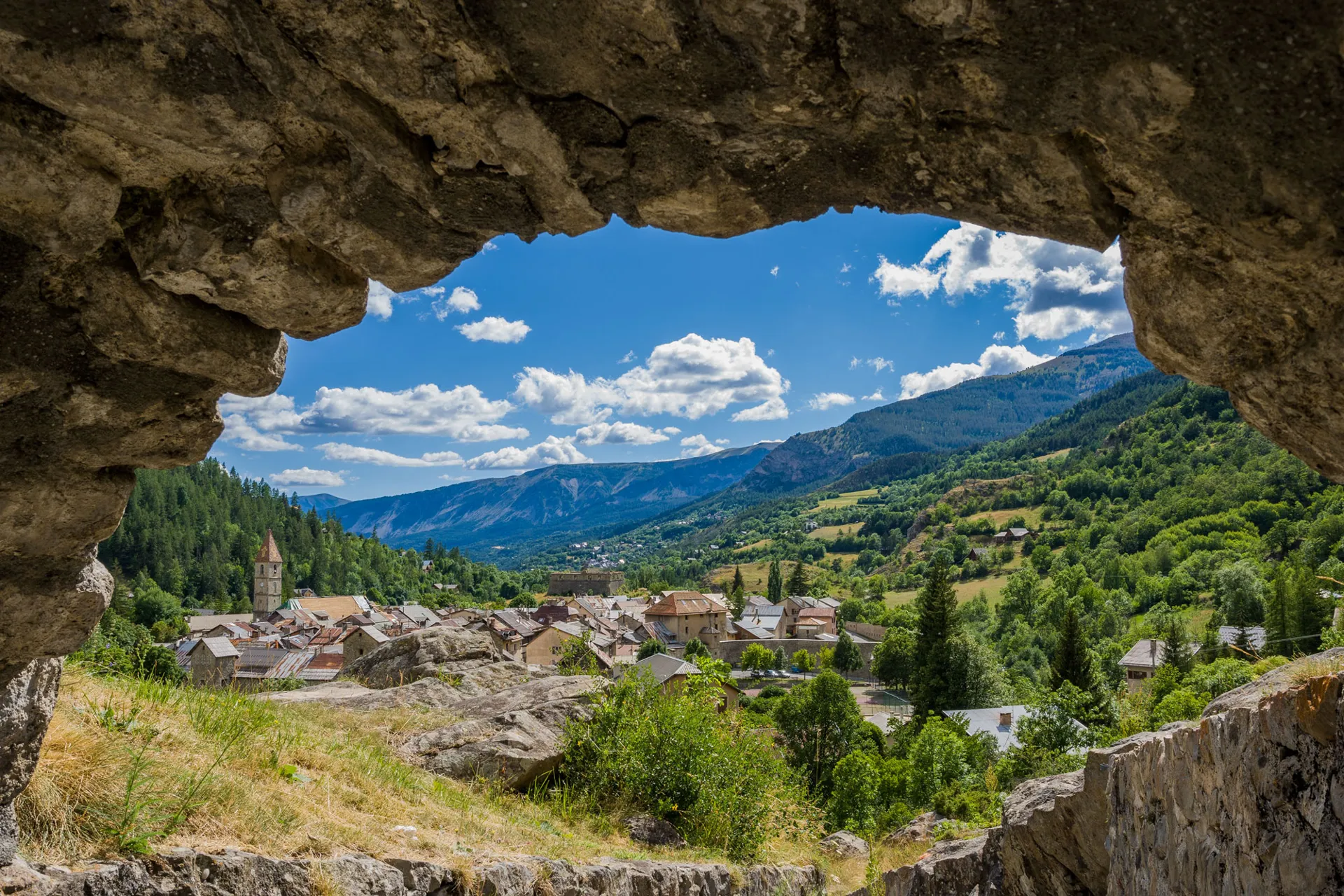
The second “Most Beautiful Village” of this trip was Colmars—not to be confused with the famous city of Colmar in Alsace. Colmars is located in the Alps, close to the Italian border. Visiting the beautiful villages in this region is quite challenging. Since the Alps are surrounded by rugged mountains, there are few convenient roads leading to them, often forcing you to take lengthy detours.
That day, I started from Vienne in the Rhône region. The village was only about 150 km away as the crow flies, but of course, there was no direct route. I first had to drive south toward Provence, then head east, and finally travel north again. The total journey was around 300 km. I could take the motorway through Provence and for some distance beyond, but the final 100 km or so had to be driven on ordinary roads.
I left Vienne at 8:30 a.m. and, after stopping for fuel and lunch along the way, arrived at Colmars—the second village on my itinerary—about five hours later. I parked in a square near the town hall, just outside the village walls. Parking was free.
The village stands at an altitude of around 1,000 metres—perhaps even higher—but probably because the weather was so fine that day, it was extremely hot. Even though it was June, I had brought long trousers and a jacket because I was travelling in the Alps. However, it was far too warm for a jacket, and even long trousers felt uncomfortable, so I changed into shorts in the car before beginning my walk.
This area was once close to the border with territories ruled by the House of Savoy, which was frequently in conflict with France. As a result, numerous fortifications were constructed here, and Colmars itself was essentially one of them. The village is enclosed by sturdy defensive walls, with a fort standing at both its eastern and western ends. These fortifications were designed by Vauban, the renowned military engineer whose works have been designated as UNESCO World Heritage Sites. Unfortunately, I was unable to enter the forts.
I first walked all the way around the village to take photographs, then entered the fortified settlement. I went in through the Porte de France on the western side. The village seemed to consist of a main street with one smaller street running along either side. At the centre of the fortifications stood the church, surrounded by cafés and shops.
Perhaps because it was Sunday, there were a fair number of tourists. To be honest, however, there were few other notable sights in the surrounding area, and getting there was difficult enough in itself, so I was genuinely surprised to see so many visitors.
Although it is a small village, I feel that I stayed longer than I had expected—even so, my visit lasted less than an hour.
That concluded the sightseeing for the day. I had originally planned to cross the mountain pass north of Colmars and continue to Briançon, where I had booked accommodation. However, the pass was closed, so I had to make yet another detour, travelling around via Grenoble before taking the much longer route to Briançon.
The road from Grenoble to Briançon eventually became an ordinary road, but the scenery along the way was extraordinarily beautiful and deeply impressive. That day, I was simply eager to reach Briançon as soon as possible, so I did not have much time to fully appreciate the magnificent landscape. If I ever travel along this route again, I would love to make a few stops and enjoy a more leisurely drive.
For a detailed description of the village, please refer to the information below.
🌿 Summary
Colmars—often known as Colmars-les-Alpes—is a beautifully preserved fortified village in the Alpes-de-Haute-Provence department of southeastern France. Standing at approximately 1,250 metres above sea level in the upper Verdon Valley, it is surrounded by alpine forests and mountains near Mercantour National Park. Colmars developed as a strategic frontier stronghold between Provence and the territories of Savoy, leaving it with imposing ramparts, gateways and two late-17th-century forts. In September 2025, it was officially admitted to the association of Les Plus Beaux Villages de France. (Les Plus Beaux Villages de France)
✨ Key Features
- Fortified walls and medieval gateways Colmars has been protected by an almost continuous circuit of ramparts since the late 14th century. Strengthened several times during the 16th and 17th centuries, the walls incorporate defensive towers, a rampart walk and two historic entrances: the Porte de France to the south and the Porte de Savoie to the north. Visitors can still walk along parts of this exceptionally well-preserved defensive enclosure. (Verdon Tourisme)
- Fort de Savoie Overlooking the northern entrance to the village, the Fort de Savoie was constructed between 1693 and 1695 on a rocky hill facing the former frontier with Savoy. Measuring approximately 50 metres long and 25 metres wide, it was designed by military engineer Guy Creuzet de Richerand as part of the reinforcement of France’s Alpine border. Its elevated position offers commanding views over Colmars and the upper Verdon Valley. (Verdon Tourisme)
- Fort de France and the Vauban defensive system South of the village stands the Fort de France, the counterpart to the Fort de Savoie. Together with the ramparts, the two forts formed a powerful defensive system developed during the reign of Louis XIV. Although Colmars is commonly described as having been fortified by Vauban, much of the actual construction was directed by regional military engineers working according to the strategic principles associated with him. (Les Plus Beaux Villages de France)
- A historic Alpine centre Inside the walls, Colmars preserves narrow lanes, small squares, fountains and tall stone houses with wooden balconies and steep roofs adapted to the mountain climate. The compact townscape reflects both its medieval origins and the practical needs of a former military community exposed to severe winters and the constant threat of attack.
- Saint-Martin Church The village’s earlier church was destroyed in the great fire of 1672. The present Church of Saint-Martin was built between 1681 and 1696 and incorporated directly into the fortified enclosure to reinforce a vulnerable section of the walls. Its austere architecture combines Provençal Romanesque and Gothic traditions, while its interior contains several historic altarpieces and religious paintings. (Verdon Tourisme)
- An important frontier stronghold Colmars became particularly important after 1388, when nearby Allos passed under Savoyard control. For more than three centuries, the village stood close to the disputed border between France and Savoy and guarded routes connecting Provence with the Italian Alps. Its frontier role diminished following the Treaty of Utrecht in 1713, which substantially changed the political boundaries of the region. (Verdon Tourisme)
- Upper Verdon and Mercantour landscapes Colmars lies beside the Verdon River, close to the edge of Mercantour National Park. Mountain trails lead through larch forests, high pastures and dramatic valleys toward locations such as the Col des Champs, the Lignin lakes and the Verdon’s upper reaches. The nearby Cascade de la Lance, reached by an easy walk from the village, is one of the area’s best-known natural attractions. (Les Plus Beaux Villages de France)
- One of France’s newest “Most Beautiful Villages” Colmars officially joined Les Plus Beaux Villages de France on 27 September 2025, alongside Hierges in the Ardennes. Its admission recognised the exceptional preservation of its military architecture, the character of its historic centre and the remarkable Alpine landscape surrounding the village. The two additions brought the association’s national network to 184 villages. (Les Plus Beaux Villages de France)
Colmars offers a distinctive combination of Provençal heritage and Alpine scenery: visitors can enter through centuries-old gateways, explore its ramparts and forts, wander among traditional mountain houses and then follow walking trails into the wild landscapes of the upper Verdon Valley.