Date and Time – 2026:06:08 09:57:38
The third “Most Beautiful Village” of this trip was Mont-Dauphin, in the Hautes-Alpes department. It is about a 40-minute drive from Briançon along the D1091 toward Grenoble. This meant retracing the road I had taken to Briançon the previous day. In fact, I had passed very close to the village then, but I did not have enough time to stop.
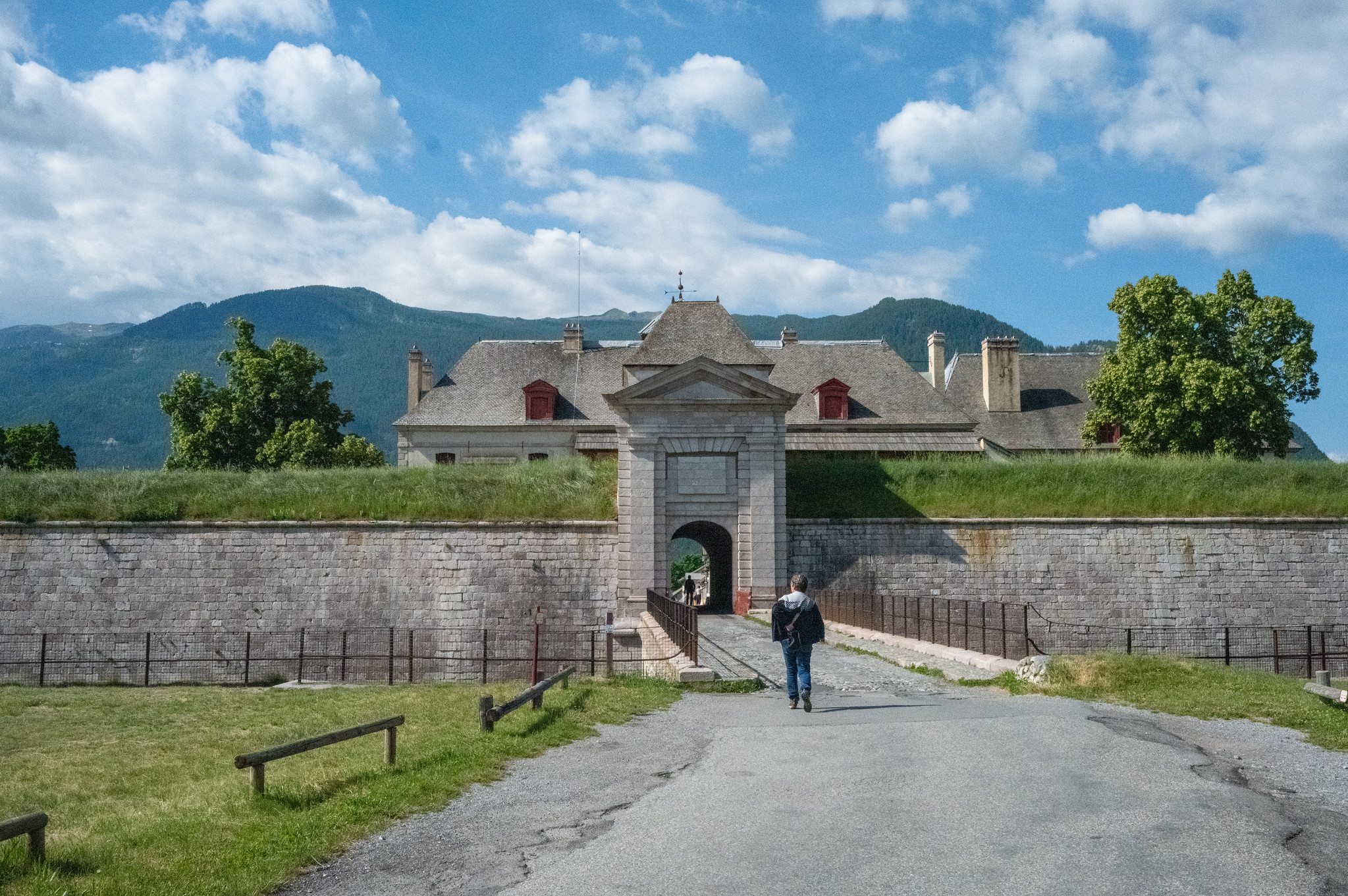
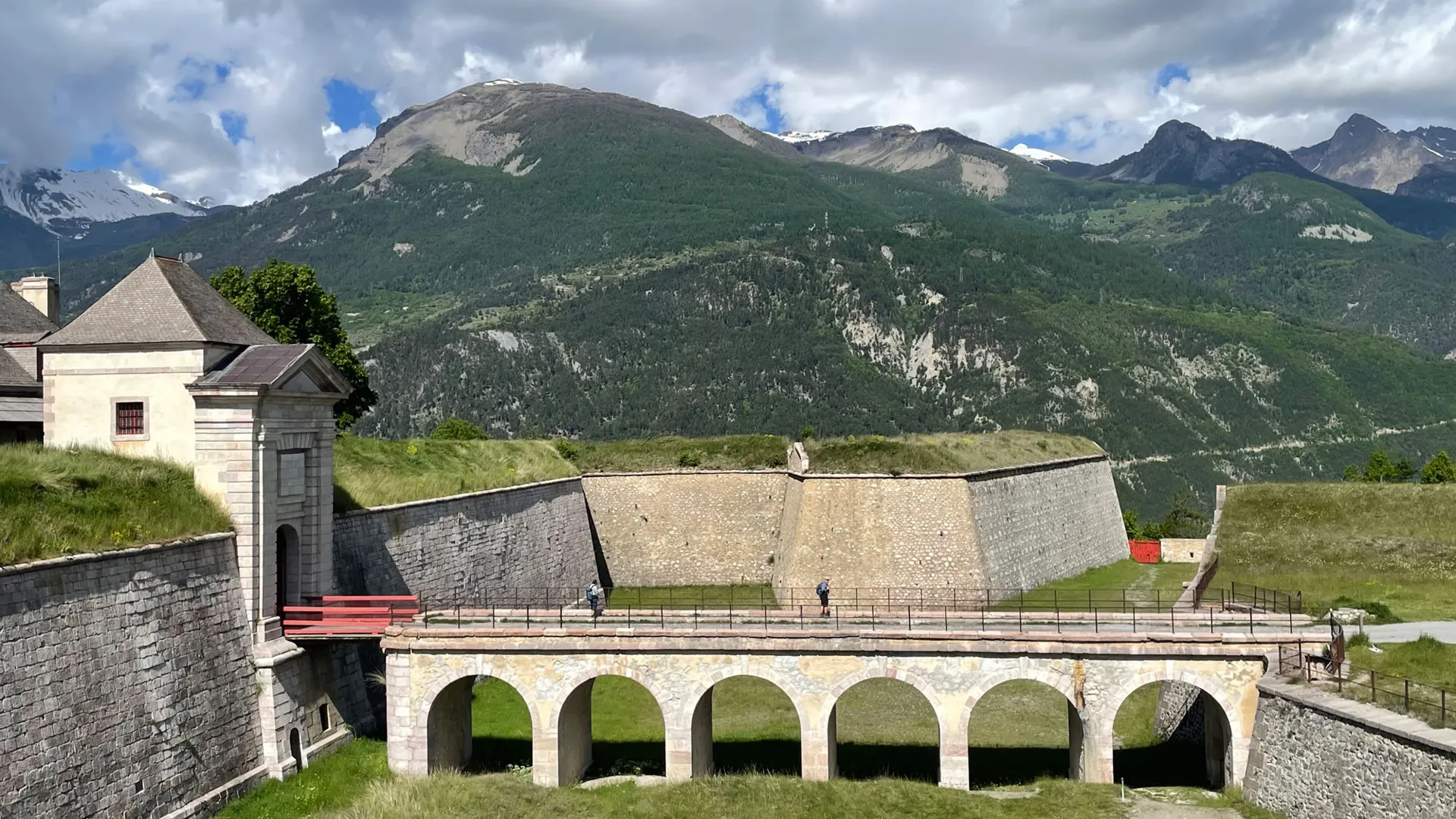
Mont-Dauphin stands on a plateau-like mountaintop, about ten minutes off the D1091. The village was originally one of the familiar strongholds designed by Vauban and is enclosed by massive defensive walls. The car park was several hundred metres away from the fortified town, and parking was free and unrestricted.
The weather in this region was once again clear and sunny that day. Although the village is situated at an altitude of around 1,000 metres, the temperature had probably already exceeded 20°C by 9 a.m. It was warm enough to be perfectly comfortable in a T-shirt and shorts.
I first walked from the car park toward the fortified town. Judging from the car park where I had left my car, I initially thought there were very few tourists. However, there was another car park closer to the village, where more cars and even some tour buses were parked, so there were more visitors than I had expected. Even so, it is, after all, a small “Most Beautiful Village,” and it was not crowded in the slightest.
To be honest, the interior of the village itself was perhaps a little underwhelming. The roads and buildings were rather widely spaced, and the buildings themselves could not really be described as particularly beautiful stone structures. Of course, the village still had some unmistakably French elements.
I will go into more detail later, but like Briançon and Colmars—which I had visited the previous day, and which should not be confused with the famous Colmar in Alsace—Mont-Dauphin was also a fortress built by Vauban. Interestingly, however, it apparently never became involved in a war during his lifetime. The fortress is said to have seen combat for the first time during fighting against Italy in the Second World War. Since this area lies close to the Italian border, it must always have had the potential to become a fiercely contested frontline region, both in earlier centuries and in modern times.
I think I spent just under an hour exploring the village.
For a detailed description of the village, please refer to the information below.