Date and Time – 2026:06:11 14:48:46
The fourth village of this trip, Hierges, was newly added to the list of Les Plus Beaux Villages de France in 2025. It is located in the Ardennes, a region spanning the border between France and Belgium’s Wallonia region. The third beautiful village I visited, Mont-Dauphin, was in the Hautes-Alpes of southeastern France, close to the Italian border, so it was quite a long way from there. I visited Mont-Dauphin on Monday and Hierges on Friday, which means that, although I stopped in several other places along the way, the journey between the two took about four days.
The day before visiting Hierges, I stayed in Colmar in Alsace. I drove directly from there to Hierges, but the fastest route actually took me along motorways through Luxembourg and Belgium, crossing both national borders by motorway. I had visited Luxembourg and Belgium before, but this was in fact my first time driving on a motorway in Luxembourg. The motorways there were very clean and well maintained, but the heavy traffic made driving somewhat difficult. The Belgian motorways were also in fairly good condition, but, just like Belgium’s ordinary roads, they somehow felt rather cramped despite being wide and well maintained. Perhaps it is simply because I am more accustomed to them, but overall I still find French roads easier to drive on.
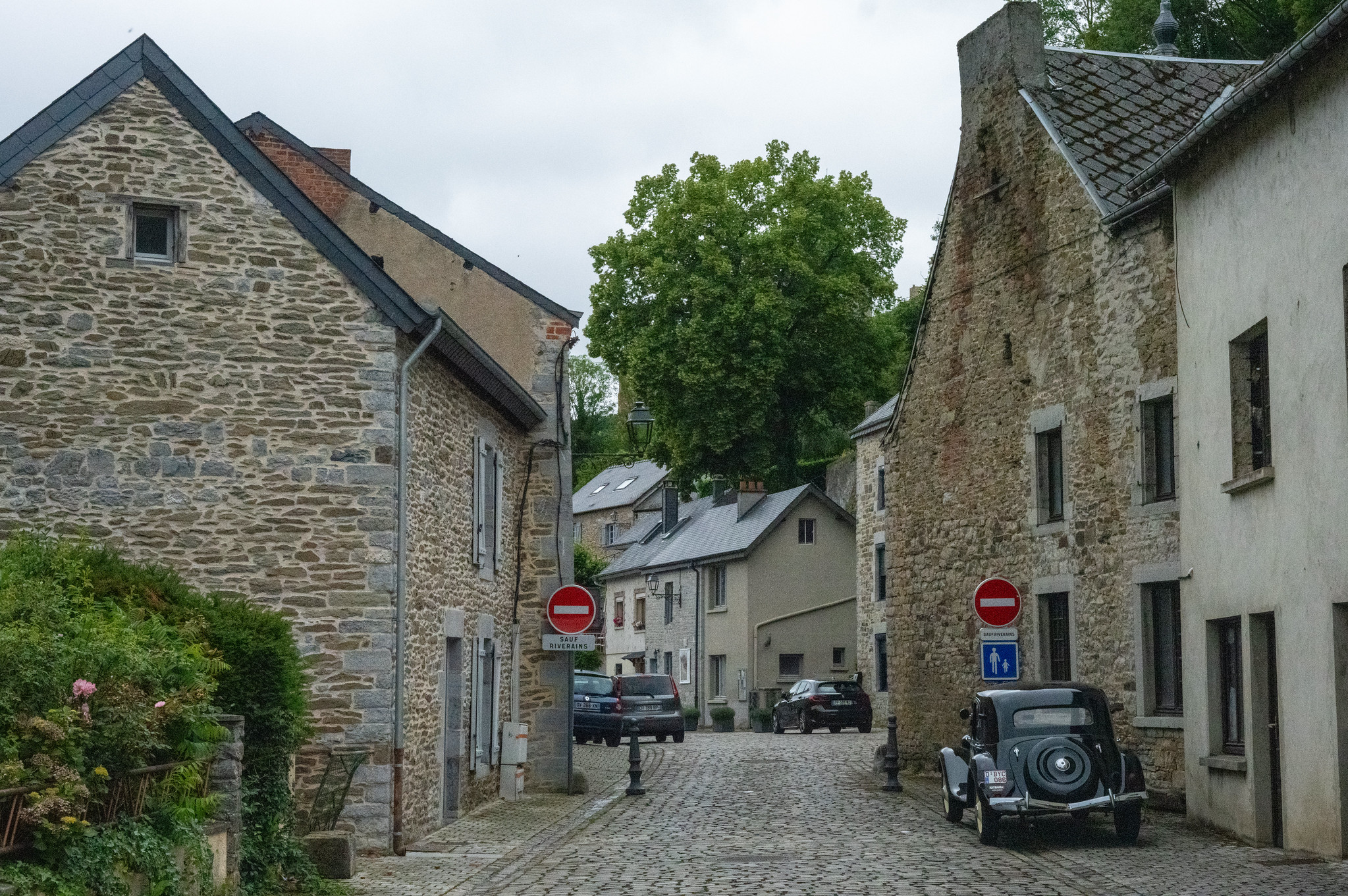
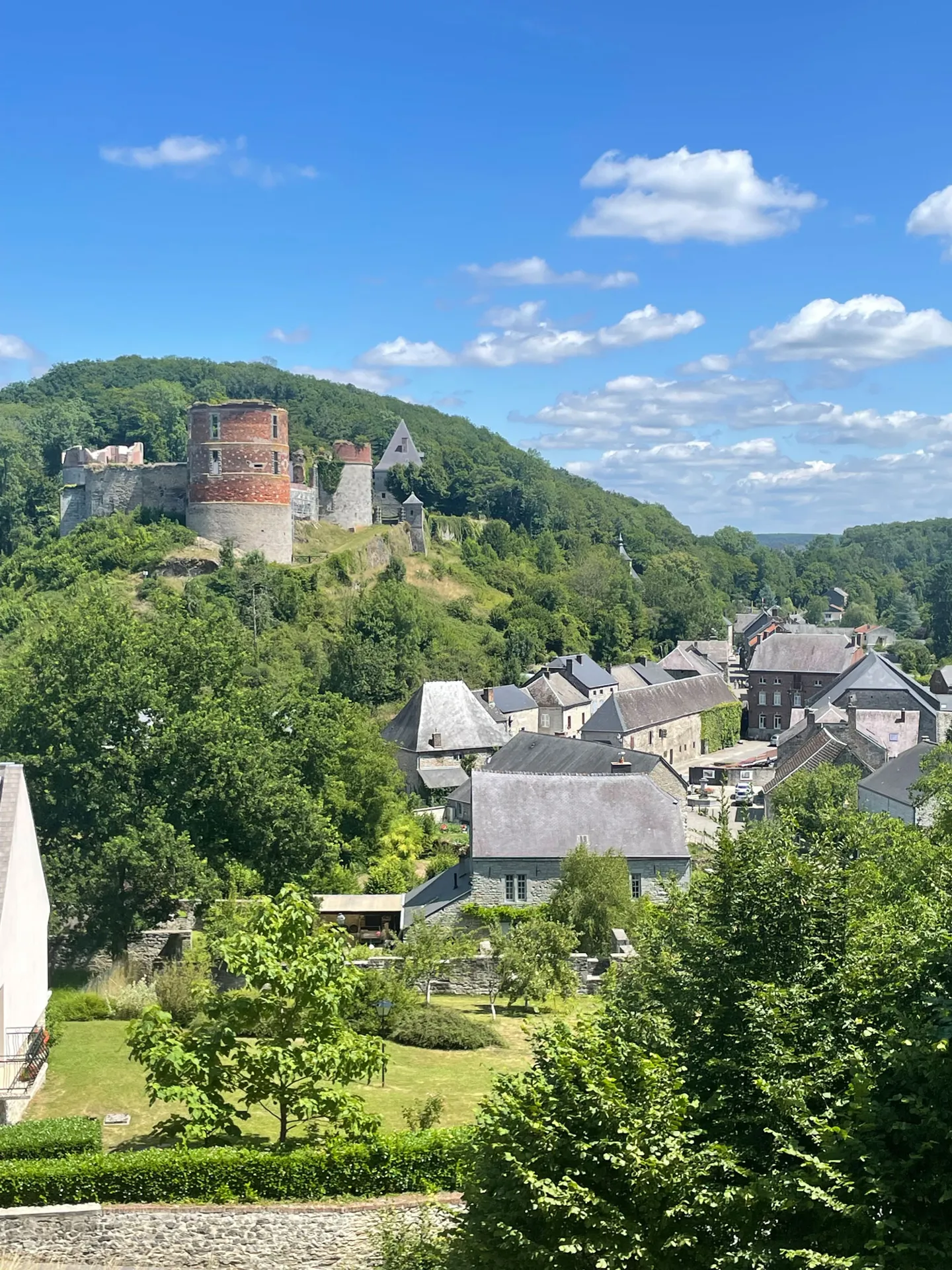
Partway through Belgium, I left the motorway and continued along ordinary roads, eventually crossing back into France. In the end, the drive from Alsace to Hierges took five hours. The village stands on a slightly elevated hill, with a castle at the very top and the village spreading out below it. “Spreading out” may be something of an exaggeration, however, as there is really only one main street.
At the opposite end of the main street from where I began my walk, there was a small square. It contained a single building that appeared to be a café and perhaps also a hotel, although I could not even tell whether it was open. The surrounding area looked like a construction site, so it may have been closed. Apart from this place, I saw no other commercial establishments whatsoever—not even a souvenir shop. Perhaps that is because Hierges has only recently been selected as one of France’s most beautiful villages.
Even walking at a leisurely pace, I completed the day’s first—and last—sightseeing visit in about 30 minutes.
For a detailed description of the village, please refer to the information below.
🌿 Summary
Hierges is a tiny medieval village in the Ardennes department of northeastern France, only a few kilometres from Givet and the Belgian border. Built beneath the romantic ruins of a Renaissance castle, the village is distinguished by its cobbled lanes, traditional houses made from local blue Givet limestone, half-timbered façades and dark slate roofs. Its position overlooking the Meuse Valley, between the Ardennes forest and the more open landscapes of the Belgian frontier, gives it a particularly picturesque setting. With approximately 160 inhabitants, Hierges preserves the intimate atmosphere of a historic frontier settlement. On 27 September 2025, it became the first village in the Ardennes department to join the association of Les Plus Beaux Villages de France. (Les Plus Beaux Villages de France)
✨ Key Features
- A medieval village beneath a Renaissance castle Hierges developed at the foot of a fortified castle overlooking the surrounding countryside. Its narrow cobbled streets, stone houses and steep lanes climbing toward the church and castle retain a remarkably coherent historic character. The absence of intrusive modern development allows visitors to experience the village almost as an open-air architectural ensemble. (Val d’Ardenne Tourism)
- The Château de Hierges The village is dominated by the impressive ruins of the Château de Hierges. A fortress was established on the site toward the end of the 9th century, probably to watch over the Meuse Valley during the period of Norman incursions. The medieval stronghold was later destroyed and rebuilt around 1560 as an elegant fortified residence. Although privately owned and generally closed to visitors, its towers, curtain walls and outer ramparts remain the defining landmark of Hierges. (Les Plus Beaux Villages de France)
- A remarkable example of Mosan Renaissance architecture The surviving castle combines defensive architecture with the refinement of a noble residence. Its mixture of red brick and blue limestone, round towers, mullioned windows and gun openings is characteristic of the Mosan Renaissance, an architectural tradition associated with the Meuse Valley. The château was attacked during the French Revolution and largely destroyed by fire in 1793, leaving the evocative ruins visible today. It has been protected as a Monument historique since 1980. (Ardennes Tourism)
- Blue-stone houses and slate roofs Much of Hierges’s visual identity comes from the use of pierre bleue de Givet, a dark bluish limestone traditionally quarried around nearby Givet. The stone appears in houses, walls, doorways and architectural details throughout the village. Combined with red brick, timber framing and slate roofs, it creates the distinctive colour palette that unifies the historic centre. (Les Plus Beaux Villages de France)
- The Church of Saint-Jean-Baptiste The Church of Saint-Jean-Baptiste was built in 1579 by Gilles de Berlaymont, lord of Hierges, and his wife Lamberte de Croy. Like the château, it is an important example of Mosan Renaissance architecture and later served as a model for churches at Foisches and Charlemont. Its interior contains furnishings and religious artworks dating from the late Middle Ages to the 18th century. (Ardennes Tourism)
- The lords of Hierges and the Crusades Hierges has historical connections with the medieval Crusader states. Manasses of Hierges, one of the village’s most famous lords, travelled to the Holy Land and became Constable of the Kingdom of Jerusalem during the 12th century. These associations contributed to local stories linking the château with Jerusalem, knights and the legendary fairy Mélusine. (Val d’Ardenne Tourism)
- The Duel Cross On the village square, a carved stone monument known as the Croix du Duel or Croix d’Occis commemorates a murder committed in 1579. It was erected as an expiatory cross by the man responsible for the killing and was later incorporated into the wall of a house. Decorated with Christ and symbols of the four Evangelists, it was listed as a Monument historique in 1926. (Ardennes Tourism)
- The old communal watermill Below the historic village stands the restored moulin banal, or communal seigneurial mill. Under the feudal system, local inhabitants were required to bring their grain to this mill and pay a fee to the lord. Its surviving waterwheel and streamside setting provide a peaceful rural contrast to the imposing castle above. (Val d’Ardenne Tourism)
- A gateway to the Meuse Valley Hierges lies approximately 5 kilometres south of Givet, close to the right bank of the Meuse and only a short distance from Belgium. The castle’s elevated position once allowed its occupants to monitor movement through this strategically important frontier valley. Today, the surrounding paths and ramparts offer attractive views toward the Meuse, the Pointe de Givet nature reserve and the wooded hills of the Ardennes. (Les Plus Beaux Villages de France)
- The first “Most Beautiful Village” in the Ardennes Hierges was officially admitted to Les Plus Beaux Villages de France on 27 September 2025, together with Colmars in the Alpes-de-Haute-Provence department. It became the association’s first classified village in the Ardennes, following two earlier unsuccessful applications in 2004 and 2010. The commission particularly praised the restoration of the village, improvements to its public spaces and the preservation of its blue-stone houses, slate roofs and medieval atmosphere. (Les Plus Beaux Villages de France)
Hierges offers an appealing combination of medieval atmosphere, Renaissance architecture and Ardennes scenery. Visitors can wander along its cobbled lanes, admire the blue-stone houses, visit the Church of Saint-Jean-Baptiste, see the old watermill and enjoy views of the romantic castle ruins rising above the village.